
By Coach Dean Moskowitz
Music Therapy for Parkinson's: Why Rhythm Unlocks Movement
Health information, not medical advice. Talk with your doctor before starting a new exercise program.
Quick answer: Music helps Parkinson’s in a way few things do: a strong, steady beat can act as an external “timekeeper” that helps bypass the brain’s faltering internal one — often visibly smoothing walking and movement. That principle, called rhythmic auditory cueing, is used by therapists for gait training, while singing supports the voice and breath that Parkinson’s quiets. You don’t need a prescription to start: walking, exercising, and doing daily tasks to strongly rhythmic music is free, safe, and often startlingly effective.
Every class I coach runs on music, and it’s not for atmosphere.
Ten years ago I noticed something that stopped me mid-class: members who shuffled in — short steps, hesitant, careful — would, twenty minutes into a workout with the right playlist, be throwing combinations on the beat, stepping wide, moving like different people. Same bodies. Same Parkinson’s. Different soundtrack.
I’ve since learned there’s real science under what I was seeing, a whole field of it. Here’s what music does for Parkinson’s, why it works, and how to put it to work at home today.
Why rhythm works on a Parkinson’s brain
Parkinson’s damages the brain circuits (in the basal ganglia) that handle automatic movement timing — the internal metronome that healthy brains use to walk without thinking about walking. That’s a big part of why steps shrink and hesitate, and why freezing happens in doorways.
Here’s the beautiful loophole: the brain has more than one way to time a movement. A strong external beat — music, a metronome, someone counting — gives the motor system a timekeeper to sync with that doesn’t depend on the damaged circuitry. Researchers call this rhythmic auditory stimulation (RAS), and therapists have used it for years to train gait in Parkinson’s: walking practiced to a steady beat, with the tempo chosen to gently stretch step timing.
You can watch this loophole work in real time. A member stuck at a doorway — feet glued, the classic freeze — starts moving again when someone counts “one-two-THREE” or hums a march. The beat reaches the muscles when the intention can’t. Physical therapists use exactly these rhythm cues in gait training.
What music helps with, specifically
Walking. The headline benefit. Walking to strongly rhythmic music (or a metronome app) has been shown to improve walking speed and step length while the beat is playing. This is why therapists prescribe cued walking practice rather than just background listening: the beat is a training tool, not wallpaper.
Freezing episodes. Rhythm is one of the best-established cues for breaking a freeze: counting aloud, a marching song, a metronome watch. Many of my members keep a “go song” in their pocket — one tune that reliably restarts their feet.
Voice and breath. Parkinson’s softens the voice, often before people notice. Singing is resistance training for exactly that machinery — breath support, vocal loudness, articulation. Group singing (choirs, sing-alongs, singing in the car at full volume) is genuinely good therapy hiding as fun. It’s the same “bigger than feels natural” principle as LSVT BIG, applied to the voice.
Mood — and its cousin, apathy. Depression and apathy are real, common parts of Parkinson’s. Music from your best years reaches moods that willpower can’t. I’ve watched the right Motown song do in ninety seconds what no pep talk of mine ever managed.
Exercise adherence. The unsung benefit. People stick with exercise that feels like something. A workout to a great playlist doesn’t feel like treatment — which is exactly why every Boxing for Balance class has a soundtrack, and why the punches land on the beat. The music is doing half my coaching.
Formal music therapy vs. do-it-yourself music
Board-certified music therapists (the credential is MT-BC — the American Music Therapy Association explains the field at musictherapy.org) work with Parkinson’s on gait cueing, voice, breath, and movement in structured sessions, sometimes in group “music and movement” classes at hospitals and Parkinson’s organizations. If that interests you, ask your neurologist or call the Parkinson’s Foundation Helpline at 1-800-4PD-INFO (1-800-473-4636) to find programs near you — many are free or low-cost.
But here’s the honest good news: most of music’s benefit for Parkinson’s requires no appointment. The beat doesn’t check credentials. Which brings us to:
How to use music at home, starting today
- Build a movement playlist. Ten to fifteen songs you love with a strong, steady, walkable beat — think Motown, big band, classic rock, salsa, gospel. Songs from your teens and twenties carry extra power. Test each one: can you march to it without thinking? Keeper.
- Walk to it. Daily walk, earbuds in (stay aware of traffic — one earbud out, outdoors), and let your steps lock onto the beat. Aim for the biggest steps the music invites. This is rhythmic gait training, free of charge.
- Exercise to it. Do your home exercises or chair routine to the playlist, moving on the beat. Punching on a beat, I can testify professionally, is deeply satisfying.
- Keep a “go song” for stuck moments. One reliable song — hummed, sung, or played — for freezes, slow mornings, and doorways. Practice with it so it’s loaded when you need it.
- Sing. Loudly. Daily. Car, shower, kitchen. Pick songs that make you take big breaths. Loud, on purpose, a little past comfortable — that’s the therapeutic zone.
- Attach music to sticky tasks. Getting dressed, doing dishes, morning stretches — chores with a soundtrack start easier and finish more often.
What the music itself should sound like
Not all music cues equally well. After a decade of building class playlists, here’s what actually works:
A strong, obvious beat. You should be able to tap it without concentrating. Ballads and free-flowing classical are lovely and nearly useless as movement cues — save them for the cool-down.
Tempo matched to the job. Most walking and general movement lands well somewhere in the range of a brisk march. Faster isn’t automatically better; a tempo you can’t keep up with makes movement worse, not better. Start where your natural pace is and nudge up over weeks.
Songs with personal weight. A generically upbeat song from 2015 does less than a mediocre song you danced to in 1962. Emotional attachment recruits more of the brain — memory, mood, movement all at once.
Consistency for cueing, variety for boredom. Keep two or three reliable cue songs the same for weeks so your body learns them deeply. Rotate everything else so class (or your walk) doesn’t go stale.
If you’re building a playlist for someone with both Parkinson’s and memory loss, weight it even more heavily toward their teens and twenties — musical memory from that window is the most durable of all, which is why it’s a cornerstone of good memory care activities.
The bigger picture
Music isn’t a substitute for medication, exercise, or your care team — it’s a multiplier for all of them. The research keeps confirming what any coach with a good playlist has watched for years: rhythm reaches the Parkinson’s brain through a side door, and movement walks through it.
If you want to feel this instead of read about it, come to a class. The gloves, the pads, the people, and yes, the playlist — first one’s free at any of our four LA and Ventura County locations. Schedule here or call 747-234-1115. Bring your song requests. I’m serious about the song requests.
Dean Moskowitz is the head coach at Boxing for Balance. He has spent more than ten years helping over 500 people with Parkinson’s — and hundreds of older adults — build strength through non-contact boxing and exercise, in classes across Los Angeles and Ventura County.
Sources: Parkinson’s Foundation — Exercise · American Music Therapy Association · Parkinson’s Foundation — living with Parkinson’s resources
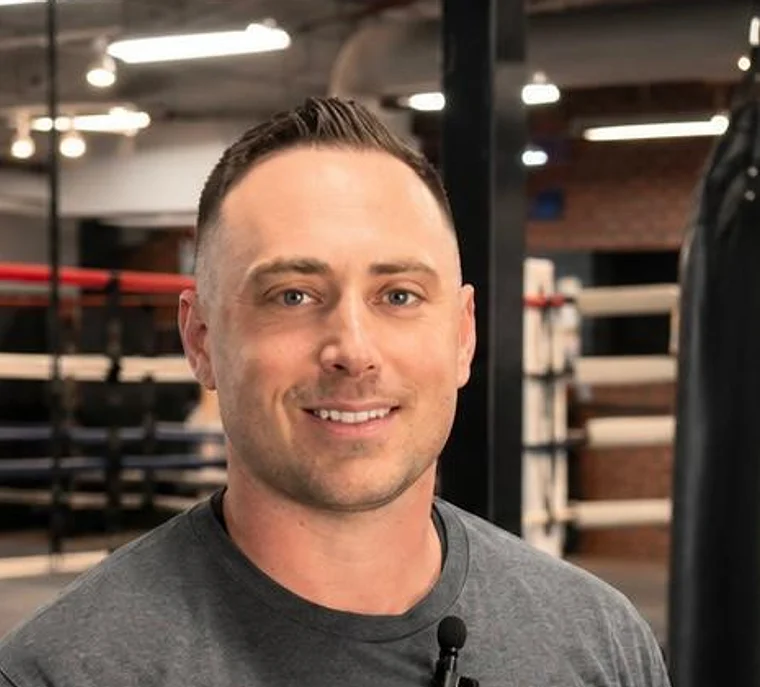
Coach Dean Moskowitz
Owner / Coach, Boxing for Balance — 500+ people with Parkinson's coached