
By Coach Dean Moskowitz
Volunteering at Rock Steady Boxing®: The Cornermen Who Make Class Work
Health information, not medical advice. Talk with your doctor before starting a new exercise program.
Quick answer: Yes, you can volunteer at a Rock Steady Boxing® gym — and the program has a formal place for you. Rock Steady Boxing, Inc. lists Volunteer as an official (and free) training tier, complete with its own Volunteer Training Camp, on the same ladder as its paid coach certifications. At the gym level, volunteers are the extra hands and eyes that let a coach safely run a room full of boxers with a balance disorder: steadying, encouraging, setting up stations, holding pads, keeping count, and catching the small things before they become falls. At my four affiliate gyms in LA and Ventura County, I will put you to work the same week you ask. Here’s what the job actually looks like.

Written by an official affiliate coach
In boxing, the fighter gets the spotlight — but nobody sane steps into a ring without a corner. The cornermen are the ones who watch everything, patch you up between rounds, and tell you the truth about how the fight is going. That’s why, in my gyms, we borrow the word for our volunteers. Our boxers are in a fight with Parkinson’s that doesn’t have a final bell, and the people standing in their corner matter more than any piece of equipment in the building.
What volunteers actually do
Forget vague “helper” images. In a Rock Steady Boxing class, volunteers have real jobs, and the room runs differently when they’re there:
Spotting and steadying. This is the big one. Parkinson’s attacks balance, and much of our curriculum deliberately challenges it — that’s how balance improves. A volunteer standing near a boxer doing footwork drills is the difference between “challenging” and “risky.” You’re not holding anyone up; you’re being close enough that nobody has to be afraid, which is precisely the condition under which people push hardest.
Encouragement with names attached. A room where someone shouts “Beautiful, Frank — bigger!” mid-round is a different room than a silent one. Volunteers learn names fast and use them loudly. If you think that sounds like a small thing, you haven’t seen what it does to a person who spent the morning being talked about in a doctor’s office to be cheered for by name in a boxing gym.
Stations, setup, and flow. Classes rotate through bag work, mitts, balance stations, and cognitive drills. Volunteers reset stations, run the clock, hand out equipment, and keep transitions smooth — which keeps rest periods honest and the energy up.
Holding pads and catching punches. With a little coaching from me, volunteers hold focus mitts for boxers. Ask any volunteer: the first time a 78-year-old with a ten-year diagnosis rips a six-punch combination into your mitts and grins at you, you’ll be back next week.
Being the eyes I can’t be everywhere. A coach watches the whole room; volunteers watch their corner of it. “Dean, Maria seems off today” is information that changes how I coach the next forty minutes — and sometimes it’s information a boxer’s family needs too.
Who volunteers? (Not who you’d guess)
The stereotype is a retired do-gooder with free afternoons. The reality in my gyms is wider and more interesting:
- Care partners and spouses who came as drivers and got promoted. Some train alongside their person; others found that being a cornerman for the whole class — not just their own boxer — gave them a role that wasn’t “patient’s spouse” for an hour. That shift matters more than I can explain in writing; our Caregiver’s Corner is built around the same insight.
- Fitness and healthcare students — kinesiology, PT, OT, nursing — who want real hours with a real population. If you’re a student considering a clinical career, one semester volunteering here will teach you things about Parkinson’s no textbook covers, and it’s honest experience to speak about when you apply to programs. Some later go on to formal RSB coach certification; the volunteer track is the free on-ramp to that ladder.
- Family members of boxers past. Some of my most faithful volunteers first walked in with a parent. The parent’s fight ended; theirs didn’t. There is no grief support group quite like a boxing gym where your mother trained.
- People who just heard about it. No connection to Parkinson’s, no boxing background, saw something about the program, showed up curious. Welcome — the room will explain itself within one class.
What you do not need: boxing experience, fitness credentials, or medical knowledge. You need reliability, warmth, and the ability to follow safety instructions. Everything else is coachable — coaching people is literally my job.
What Rock Steady Boxing, Inc. offers volunteers
At the national level, Rock Steady Boxing’s coach-training program includes a Volunteer tier at no cost — alongside its paid Head Coach ($899), Coach ($599), and Assistant Coach ($149) certifications — and runs a Volunteer Training Camp as part of its official training-camp lineup. That’s worth pausing on: the national organization thought volunteers were important enough to build formal training for, and then made that training free. It tells you exactly where volunteers sit in this program’s culture.
At the local level, every affiliate handles day-to-day volunteering its own way. Mine works like this: come watch a class first, then we talk for fifteen minutes about what role fits you, then you start with the simple jobs — encouragement, stations, spotting — and grow from there at whatever pace suits you. Any deeper training, including pad work, happens with me directly before you’re ever responsible for it in class.
How much time does it take?
Less than you’re bracing for. A typical commitment at my gyms is one class a week, same day and time — roughly ninety minutes door to door. Consistency beats quantity here, and not for sentimental reasons: boxers with Parkinson’s do better with familiar people in the room, and a volunteer they see every Tuesday becomes part of the routine that gets them through the door on hard days. If you can only manage twice a month, tell me that up front and I’ll slot you where it works; what I ask is simply that the room can count on whatever you commit to. And if you need to step away for a season — surgery, travel, life — the door swings back open. Several of my cornermen have left and returned more than once. The gym keeps no score.
Why this might be for you
I’ll be straight about the exchange. You’ll give: a consistent hour or two a week, real attention, and some sweat. You’ll get: the specific, uncomplicated good of being useful to people in a genuine fight; a room full of the toughest, funniest people you’ve ever met; and a front-row seat to small miracles — the boxer who stops shuffling and starts striding, the one who laughs for the first time since diagnosis, the couple who found something to do together inside a disease that isolates.
I’ve watched volunteering quietly fix things in the volunteers, too — new retirees who needed somewhere to matter on Tuesdays, grieving kids who needed the gym their dad loved, students who arrived for résumé hours and stayed for years. This program has a way of giving back more than it takes from everyone who touches it.
How to start
If you’re in Los Angeles or Ventura County: call or text 747-234-1115, or just come see a class at Santa Monica, Lake Balboa, Woodland Hills, or Thousand Oaks. Fifteen minutes of watching will tell you whether this room is your room.
Anywhere else in the world: find your nearest affiliate with Rock Steady Boxing’s official location finder and ask them directly about volunteering — I’ve yet to hear of an affiliate that turned away a reliable pair of hands.
Every boxer needs a corner. Come stand in one.
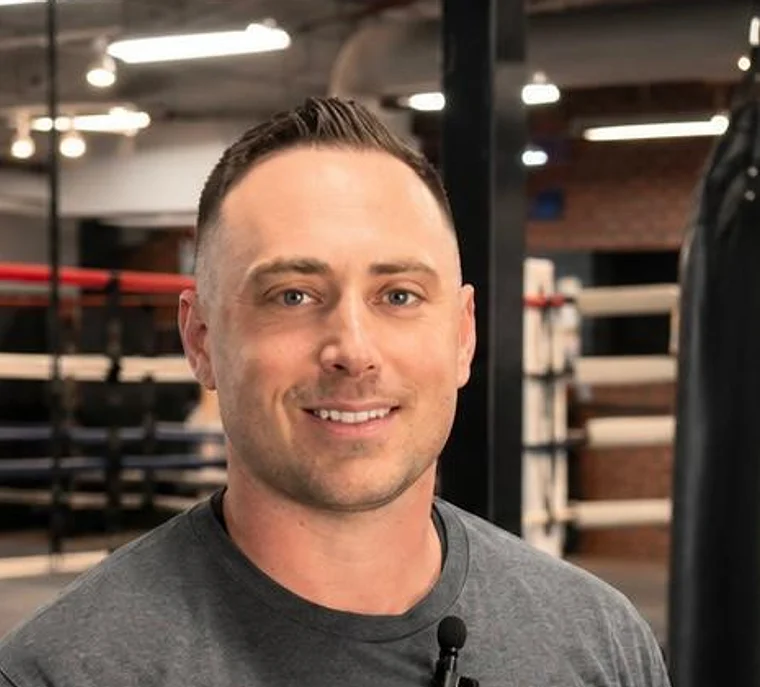
Coach Dean Moskowitz
Owner / Coach, Boxing for Balance — 500+ people with Parkinson's coached