
By Coach Dean Moskowitz
Parkinson's Apathy: It Looks Like Giving Up. It Isn't.
Health information, not medical advice. Talk with your doctor before starting a new exercise program.
Quick answer: Apathy affects roughly 40% of people with Parkinson’s, and about half of those people are not depressed at all — it’s a separate symptom of the disease, not a mood, an attitude, or a character flaw. It’s caused by damage to the brain’s motivation machinery, which means the wanting is broken while the caring often isn’t. The best available evidence says medication is the most effective treatment, so this is a conversation for your neurologist, not something to fix with willpower. Structure, routine, and other people help enormously alongside it.
A daughter said something to me in a parking lot last year that I’ve thought about ever since.
“He’s just given up. He doesn’t care about anything anymore, and honestly? I’m starting to get angry at him.”
Her father was sitting in the car. He’d come to class, done the whole workout, thrown good punches. And when it ended he sat back down and waited to be taken home, the same way he’d waited to be brought.
He hadn’t given up. He had apathy — one of the most common symptoms of Parkinson’s, and far and away the most misread. It costs people their relationships, because from the outside it looks exactly like not caring about you.
So let’s take it seriously, because almost nobody explains this one properly.
What apathy actually is
Apathy is a loss of motivation — the drive to start things, to pursue things, to want. In Parkinson’s it comes from the same place the movement problems come from: damage to dopamine systems, specifically the circuits that assign value to actions and generate the push to begin them.
Neurologists sometimes describe it as an auto-activation deficit. The machinery that turns “I should call my brother” into actually picking up the phone has been damaged. The thought still forms. The bridge from thought to action doesn’t.
Here’s the part families need most: apathy is usually not the same as not caring. Many people with apathy still love their families, still enjoy things once they’re in them, still feel warmth. What’s missing is the engine that starts the activity. That’s why someone can look completely disengaged all morning and then genuinely enjoy the class you dragged them to — and still not initiate going next week.
The numbers
A systematic review and meta-analysis in Movement Disorders pooled 23 studies covering 5,388 people with Parkinson’s. What it found:
- Apathy affects about 39.8% of people with Parkinson’s — roughly four in ten.
- Half of the people with apathy had no depression and no cognitive impairment. The researchers concluded this confirms apathy as “a separate clinical syndrome” in Parkinson’s.
- Apathy tracked with worse motor scores and more disability.
That second point deserves a moment. When a person stops initiating, the assumption in almost every household is depression — or, more painfully, that they’ve stopped caring. In half of cases, there is no depression to find. The person isn’t sad. The starter motor is broken.
The same paper made a point I’d underline for every family reading this: treating apathy could improve quality of life, reduce caregiver burden, and reduce disability by restoring motivation for self-care. It isn’t a cosmetic symptom. It’s load-bearing.
Apathy or depression? How to tell
They overlap and often co-occur, so this is a job for your doctor, not a quiz on a website. But the distinction that helps families most is this:
Depression usually hurts. There’s sadness, hopelessness, guilt, sometimes worthlessness. The person feels bad, and typically says so or shows it.
Apathy usually doesn’t hurt — it’s flat. No sadness, no despair. Ask “are you sad?” and you’ll often get an honest “no.” Ask “does it bother you that you haven’t left the house in a week?” and the answer is frequently a genuine shrug. That absence of distress is the tell, and it’s also what makes apathy so easy to mistake for stubbornness.
A useful family question: “Is he unhappy, or is he just… not starting anything?” Unhappy points toward depression. Not starting, without unhappiness, points toward apathy. Both are common, both are treatable, and plenty of people have both at once.
Either way, the action is identical: tell the neurologist in plain words. “He has stopped initiating anything” is a sentence that changes an appointment.
The honest part: what the evidence actually supports
Here’s where I have to say something that doesn’t help my business.
A Bayesian network meta-analysis in Heliyon pooled 19 randomised controlled trials covering 2,372 patients, comparing every treatment approach studied for apathy in Parkinson’s — medication, brain stimulation, supplements, exercise, placebo.
Medication came out on top — and it significantly outperformed exercise-based interventions.
I run an exercise program. I would love to tell you that boxing fixes apathy. The best evidence we have says the most effective treatment for this specific symptom is pharmacological, and that’s a conversation with a neurologist — not something to be solved by a coach, a spouse, or a motivational speech.
So if you take one thing from this article: bring apathy up at the next appointment, by name. Ask directly whether medication adjustment could help. Dopamine agonists performed comparably to other medications in that analysis, and your neurologist may have options they haven’t offered because nobody described the symptom to them.
What still helps, alongside treatment
None of that makes the daily part pointless. It just means we should be honest about what’s doing the heavy lifting.
Structure beats motivation, always. This is the single most useful idea for apathy. Motivation is exactly the broken part — so stop relying on it. A class at 10 a.m. on Tuesdays, a ride that arrives whether or not anyone feels like it, clothes laid out the night before. The best predictor of whether my members with apathy keep coming is not how motivated they are. It’s whether Tuesday is automatically the boxing day.
Be the external starter. Apathy responds far better to “we’re leaving in ten minutes, here are your shoes” than to “do you want to go?” The second question hands the job to the broken system. The first bypasses it. This is not bossing someone around — it’s a prosthetic for a specific deficit, and most people are relieved by it.
Shrink the first step until it’s almost nothing. Not “let’s exercise” but “stand up with me.” Starting is the expensive part; continuing is usually far cheaper.
Use other people as the engine. A group with a fixed time, other people expecting you, and a coach who notices when you’re missing does something no home program can. It’s also why apathy and isolation feed each other so viciously — the symptom removes the drive to seek out the people who would help, and then the loneliness makes everything worse.
Exercise anyway. Even if it isn’t the strongest treatment for apathy specifically, exercise remains one of the best-supported things in all of Parkinson’s care — the Parkinson’s Foundation recommends at least 2.5 hours a week. Do both: treat the apathy medically, and keep moving.
For the family: the part that matters most
If someone you love has stopped initiating, please hear this clearly.
It is very likely not about you. Not rejection, not laziness, not a comment on your marriage or your visits. It is a symptom of a brain disease, as much as a tremor is.
The anger you may be feeling is normal and nearly universal, and it usually comes from grief wearing a disguise. But anger aimed at apathy never works, because there’s no motivation on the other end to appeal to — you’re shouting at a broken starter motor.
What works instead: stop asking whether they want to, and start telling them warmly what’s happening next. Keep the structure. And get the symptom in front of the neurologist by name.
If you’re the one carrying this, our Caregiver’s Corner has the verified numbers worth having — including California’s Caregiver Resource Centers, which offer free counseling and respite to families and which almost nobody calls.
Where to get help
- Your neurologist, first. Say the word “apathy.” Describe what you see: stopped initiating, stopped hobbies, isn’t sad about it.
- Parkinson’s Foundation Helpline: 1-800-4PD-INFO (1-800-473-4636) — free, weekdays, English and Spanish. Good for “how do I bring this up with the doctor” questions.
- Our free monthly support group — last Tuesday, 2 p.m. Pacific, on Zoom, for people with Parkinson’s and care partners. Details here or text 747-234-1115.
- A class with a fixed time — ours or anyone’s. The structure is the medicine here. What a first class looks like.
One last thing
That man in the car came back the next week, because his daughter stopped asking if he wanted to and started saying “it’s Tuesday, let’s go.” He’s still coming. He still rarely suggests it himself.
That’s not failure. That’s what managing apathy looks like — somebody else holds the starter motor, and the person still gets to have the life. His daughter isn’t angry anymore, which might be the bigger win.
Dean Moskowitz is the head coach at Boxing for Balance. A lifelong martial artist and former MMA fighter, he has spent more than ten years helping over 500 people with Parkinson’s — and hundreds of older adults — build strength through non-contact boxing and exercise, in classes across Los Angeles and Ventura County. Apathy is a medical symptom with medical treatments — please raise it with your neurologist rather than treating it as a motivation problem.
Sources: Apathy in Parkinson’s disease: systematic review and meta-analysis (Movement Disorders, 2015) · Treatment of apathy in Parkinson’s disease: Bayesian network meta-analysis of randomised controlled trials (Heliyon, 2024) · Parkinson’s Foundation Helpline
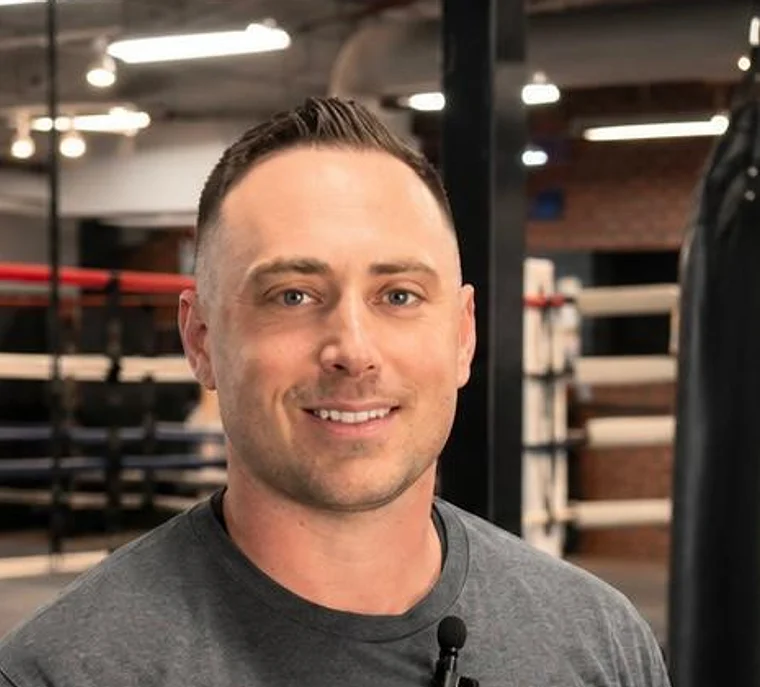
Coach Dean Moskowitz
Owner / Coach, Boxing for Balance — 500+ people with Parkinson's coached