
For spouses, kids, siblings & friendsEvery fighter needs a corner
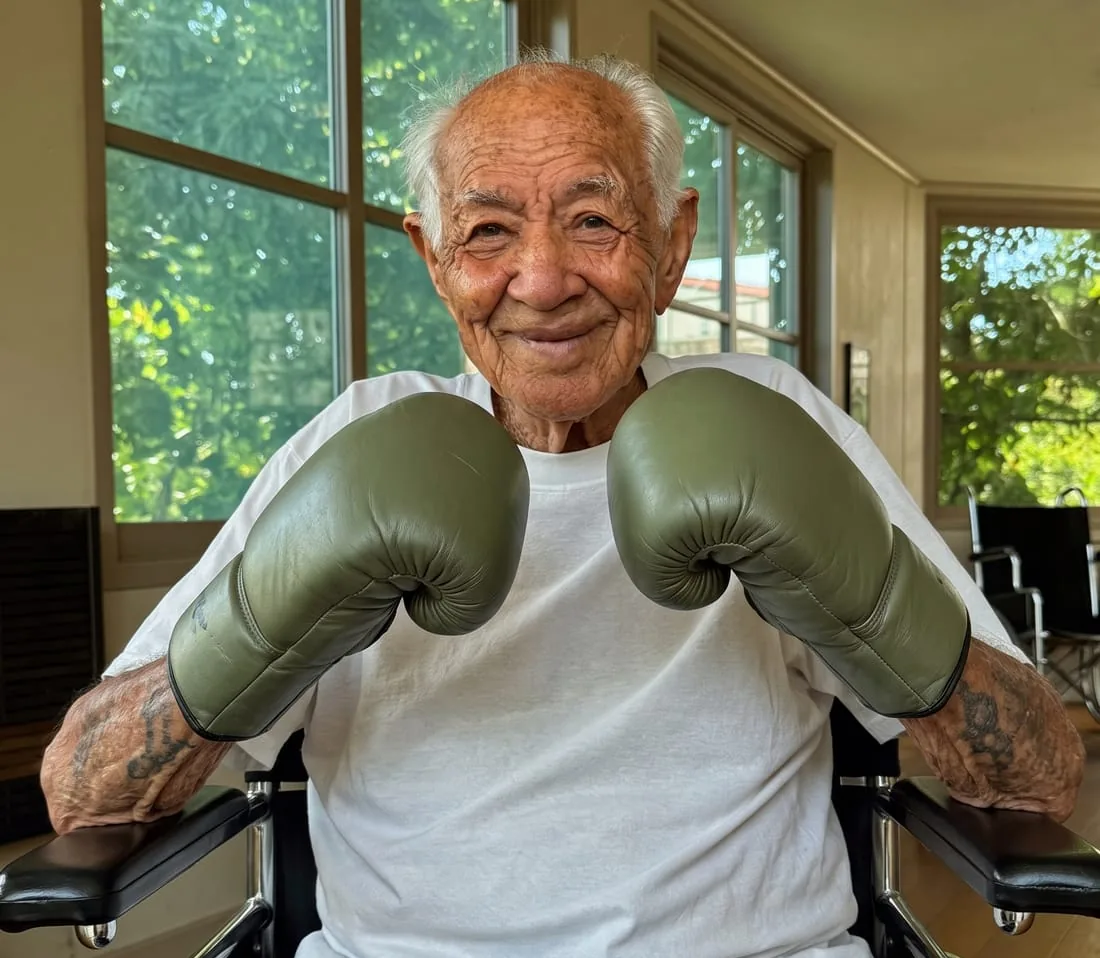
In boxing, nobody wins alone. The cornerman reads the fight from outside, patches you up between rounds, and tells you the truth. If someone you love has Parkinson's, that's your job now — this page is the practical part, with every number verified by hand.
The job
What a corner
actually does
Nobody trains you for this and most people never get told it's a real role with real skills. It is. Here is the work, in four parts.
Between rounds
You handle what they shouldn't have to
Rides when driving stops. Med timing. The pharmacy. Protecting class days on the calendar and laying out the workout clothes the night before. Between sessions, the encouragement is small and specific: bigger steps down the hallway, standing tall at the sink, a short walk after lunch. None of it is glamorous and all of it is the difference between a program that sticks and one that quietly ends.
Reading the fight
You see what they can't
From inside the ring, everything is noise. You are the one who notices the voice got quieter, the steps got shorter, or that they have stopped wanting things they used to love. That last one is often apathy or depression — real, common symptoms of Parkinson's, not laziness or giving up. Say it out loud to the neurologist. Both are treatable.
Between the ropes
You tell the truth at appointments
People minimise in front of their doctor. Not from dishonesty — from pride, or a good day, or twelve minutes on the clock. Keep a short note on your phone of what you actually saw this month: falls, freezing, sleep, mood, medication wearing off early. Two sentences of specifics changes an appointment.
Knowing the round
You know when to push and when to stop
The best corners do both. Some days the answer is "get your shoes, we are going." Some days it is "we are staying home and that is fine." Getting that call right, over and over, is most of the job — and nobody gets it right every time.
The part corners forget
The corner needs
a corner too
It's a pattern Dean sees constantly: the person with Parkinson's slowly gains a new community — a class, a group, other people who understand. And the spouse, who drove them to all of it, quietly loses theirs. Their own friendships thin out while they're busy holding somebody else's life together.
That matters medically, not just emotionally. In a survey of people with Parkinson's, loneliness tracked with substantially worse reported symptoms — and the loneliness research on caregivers points the same direction. You are not being selfish by protecting one evening a week. You are maintaining the equipment.
Four things that actually help
- Ask for the respite. Both Caregiver Resource Centers below help arrange it and most people never call. It is free to ask.
- Keep one thing that is only yours. A weekly standing anything. Guard it like an appointment, because it is one.
- Say yes when someone offers. People want to help and don't know how. Have a specific answer ready — a Tuesday ride, an hour on Sunday.
- Come to the class. Caregivers are welcome in every session we run. Some watch, some hold pads, some do the whole workout. You are not a visitor.
The numbers worth having
Who to call,
and when
Organised by what you need rather than alphabetically. Every number below was dialled-checked by hand in August 2026 — if you find one that has changed, tell us and we'll fix it the same week.
National — start with the first one
Start here. Free, staffed weekdays 9 a.m.–7 p.m. Eastern, in English and Spanish. Give them your zip code and they will point you to groups, classes, and Parkinson's-experienced professionals near you. Also answers caregiver questions directly.
General support, education, and local chapter connections. They also run a separate rehabilitation line at 1-888-606-1688 staffed by licensed physical therapists — useful when your question is specifically about exercise or mobility.
For living well today rather than research news. They publish the Every Victory Counts manual — including a version written specifically for care partners — free to order, with a suggested donation.
Research and clinical trials. If your fighter has ever said "I want to be useful to the science," this is that call.
A public service of the U.S. Administration for Community Living. Not Parkinson's-specific — this is how you find transportation, meals, home care, legal help, and respite anywhere in the country by zip code.
Los Angeles County
LA's own Parkinson's nonprofit. Support groups, newly diagnosed programs, young onset groups, care partner programs, and resource specialists who answer the phone.
Based at the Pacific Movement Disorders Center and staffed by a licensed social worker. Good for "I don't know what I need yet" conversations.
This one is for YOU, not your fighter. Free counseling, caregiver assessment, training, and help arranging respite care for LA County families. One of California's state-funded Caregiver Resource Centers.
The county Information & Assistance line for adults 60+, adults with disabilities, and family caregivers — nutrition, in-home support, transportation, and legal help. Weekdays 8 a.m.–5 p.m.
Shared-ride service for people who cannot use regular buses or trains. Eligibility is based on ability, not age or diagnosis, and requires an in-person evaluation. Apply before you need it — the process takes time.
Ventura County
The Caregiver Resource Center serving Ventura County (along with Santa Barbara and San Luis Obispo). Counseling, education, and respite help for family caregivers — again, this one is for you.
ADA certification and the starting point for county-wide accessible transit questions.
Door-to-door rides for riders 65+ and ADA cardholders in Thousand Oaks.
Door-to-door rides for riders 60+ and people with disabilities in Simi Valley.
Free, 24/7, in both counties. The catch-all when you do not know who to call: food, housing, utilities, in-home care, crisis support.
Verified August 2026. Programs change, phone trees get rearranged, and nonprofits move. If you call one of these and it has changed, please tell Dean at 747-234-1115 — a wrong number on a page like this is worse than no page at all, and we would rather hear it from you than not know.
One more thing
You did not sign up for this corner. You were put in it because you love somebody. After a decade of watching hundreds of you work, Dean will tell you this: the fighters who do best almost always have somebody like you standing just outside the ropes — and most of them have no idea how much of their good days you are responsible for.