
By Coach Dean Moskowitz
Is Rock Steady Boxing® Covered by Insurance or Medicare?
Health information, not medical advice. Talk with your doctor before starting a new exercise program.
Quick answer: In most cases, no — Rock Steady Boxing® classes are fitness classes, and Original Medicare does not cover gym memberships or fitness programs, by its own published rule. But that’s not the end of the story. Many Medicare Advantage plans include fitness benefits such as SilverSneakers that can offset gym costs depending on how a given affiliate operates; some affiliates offer financial assistance or sliding-scale fees; and when the Rock Steady method is delivered one-on-one by a licensed physical therapist in a clinical setting, that’s a therapy service — a different billing world entirely. Below: how to find out what your situation allows, in three phone calls, plus how pricing works at my four gyms — where your first class is free regardless.

Written by an official affiliate coach
First, the necessary honesty: I’m a coach, not an insurance advisor, and plans differ wildly. Treat everything below as a map of where to look, then verify with your own plan. What I can promise is that this map is current — I checked every source the day I wrote this — and that it reflects what I actually see my members navigate.
Why this is confusing in the first place
Your neurologist tells you exercise is one of the most important things you can do for Parkinson’s. The research backs that up. So it feels like the healthcare system should pay for the exercise program your doctor recommended — and then you discover it mostly doesn’t, because insurance draws a hard line between treatment (delivered by licensed clinicians, billable) and fitness (everything else, on you). Rock Steady Boxing group classes sit on the fitness side of that line. It’s a frustrating line. It’s also the reality, so let’s work with it.
Original Medicare: a clear no
Medicare’s own coverage page says it plainly: Original Medicare doesn’t cover gym memberships or fitness programs, and you pay all costs for them. No exceptions for Parkinson’s, no doctor’s-note workaround. If you have Original Medicare only (Part A and B), plan on paying class fees out of pocket — and read on, because the affiliate-side options below still apply to you.
Medicare Advantage: where real money hides
Here’s where it gets interesting. That same Medicare page notes that gym and fitness benefits may be part of the extra coverage offered by Medicare Advantage plans, other Medicare health plans, or some Medigap plans. The best-known of these benefits is SilverSneakers — a fitness program included with many Medicare Advantage plans that gives members free access to participating gyms. Insurers run several similar programs under different names.
The catch for our world: whether that helps with Rock Steady Boxing depends on how the affiliate near you operates. Some affiliates run inside larger gyms — like my Woodland Hills location inside ZOOZ Fitness — and some host facilities participate in these fitness networks; a standalone affiliate studio may not. There is no universal answer, which is exactly why the three phone calls below beat any article, including this one.
The three phone calls that settle it
Call 1 — your insurance plan (number on the back of your card): “Does my plan include a fitness benefit like SilverSneakers, and which gyms near me participate?” If you have Medicare Advantage, this call alone can be worth hundreds of dollars a year.
Call 2 — the affiliate gym: “Do you participate in any insurance fitness programs? Do you offer financial assistance or a sliding scale?” Don’t be shy about the second question — Rock Steady Boxing, Inc.’s own FAQ notes that some locations offer financial assistance or sliding-scale fees based on need. Affiliates are run by people who chose to serve the Parkinson’s community; nobody will be offended.
Call 3 — your doctor’s office: “Is there a physical-therapy route for boxing-based Parkinson’s work?” RSB trains licensed clinicians — mostly PTs and OTs — to deliver the method one-on-one in therapy settings. When a licensed therapist delivers it as part of your plan of care, you’re in ordinary physical-therapy billing territory, where insurance rules are completely different from gym memberships. Whether that applies to you is between your doctor, the clinic, and your plan — but it’s a real path many people never learn exists.
The exact script for the insurance call
Insurance phone menus are their own workout, so here’s the script my members have refined. After you reach a human, say: “I have Parkinson’s disease and my doctor has recommended regular exercise. Does my plan include any fitness benefit, gym membership benefit, or wellness allowance?” Then, whatever they answer, ask these three follow-ups: “Which specific gyms near ZIP code ___ participate?” (get names, not a website to check later), “Is there a monthly or annual dollar limit?”, and “Do I need anything from my doctor to activate it?” Write down the representative’s name and the date. If the answer sounds like a no, ask one more: “Is there a wellness or flex-spending allowance that could apply to exercise classes?” — some Medicare Advantage plans tuck fitness money under a different benefit name, and representatives don’t always volunteer it. Ten minutes, pen in hand, and you’ll know more about your actual options than most people ever learn.
Other corners worth checking
HSA/FSA funds: whether fitness expenses qualify depends on your specific situation and sometimes on documentation from your doctor — ask your plan administrator or tax advisor rather than trusting anything you read online, including this.
Veterans: if you’re enrolled in VA care, ask your care team what adaptive fitness support exists — benefits vary and change, and your team will know the current answer.
Parkinson’s organizations: local chapters and foundations sometimes run grant or scholarship programs for exercise classes. Our guide to Parkinson’s support organizations is a good starting map of who serves this community.
How it works at my four gyms
At Santa Monica, Lake Balboa, Woodland Hills, and Thousand Oaks, the structure is simple and public: your first class is completely free — full class, gloves provided, no card on file — and after that, pricing depends on location and how often you train. I wrote a whole post on how Rock Steady Boxing pricing actually works if you want the detail.
And here’s my standing promise on the money conversation: call me at 747-234-1115 and tell me what your insurance situation is, and I’ll tell you exactly what your options are at my gyms — including what SilverSneakers-type benefits can and can’t do at each location, and what we can work out if cost is the thing standing between you and training. I have never once let the price be the reason someone with Parkinson’s couldn’t fight back. That’s not a marketing line; ask anyone in the room.
The bottom line
Don’t wait for insurance to make this decision for you. The research on boxing for Parkinson’s says the cost of not exercising compounds far faster than any class fee — falls, lost independence, and the slow shrinking of what feels possible. Make the three phone calls, take the free first class, and let’s figure the rest out like adults who both want the same thing: you, training, for years.
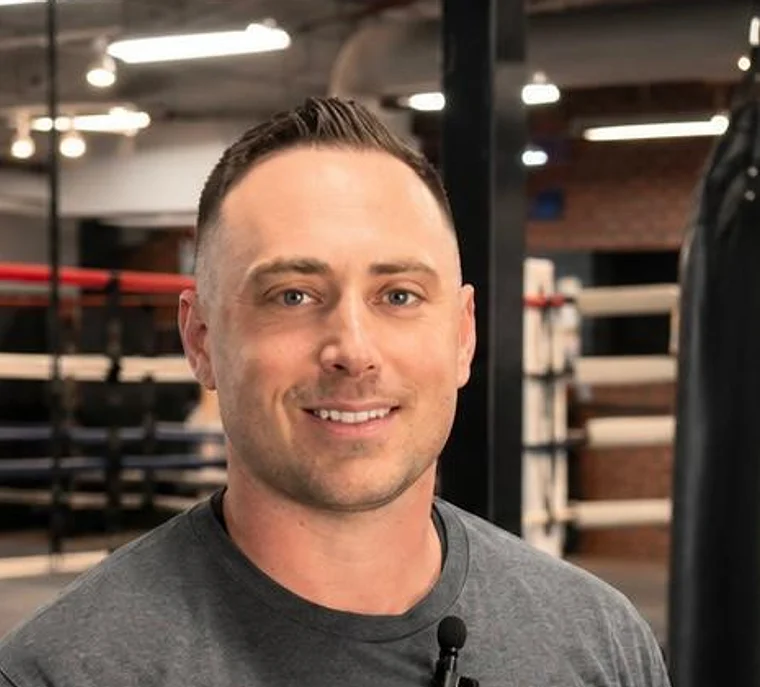
Coach Dean Moskowitz
Owner / Coach, Boxing for Balance — 500+ people with Parkinson's coached