
By Coach Dean Moskowitz
PMD Alliance: The Org That Answers When the Big Guys Are Busy
Health information, not medical advice. Talk with your doctor before starting a new exercise program.
Quick answer: PMD Alliance — the Parkinson & Movement Disorder Alliance — is a 501(c)(3) nonprofit based in Arizona that provides free resources and education to people affected by Parkinson’s and every other movement disorder, reaching people in all 50 states. Created about a decade ago, they’ve carved out a distinct identity among the national organizations, captured in their own words: “We’re not like the big guys. You come to us with a problem, and we partner with you to solve it.” Call them at (800) 256-0966. If you’ve ever felt like a number inside a big system — or you’re dealing with a movement disorder that isn’t Parkinson’s and keep finding resources that don’t quite fit — this is your organization.
Every fight card has headliners, and in the Parkinson’s world the headliners are household names — the Fox Foundation, the Parkinson’s Foundation. But anyone who’s spent time around boxing knows the gym rats matter as much as the stars. The people who answer the phone, know your name, and work your specific problem.
That’s the role PMD Alliance has chosen, and they say so themselves, right on their website: “We’re not like the big guys. You come to us with a problem, and we partner with you to solve it.” In a space where mission statements tend toward the grand, I find that piece of self-awareness genuinely refreshing.
Where they came from
By their own telling, PMD Alliance was created over a decade ago out of “a deep desire to help everyone impacted by a movement disorder diagnosis” — and grew into an organization providing free resources and education to people in all 50 states and beyond. They’re a registered 501(c)(3) (EIN 47-5315579, verifiable through ProPublica), headquartered in Phoenix, Arizona.
Notice the wording that sets them apart: movement disorder, not just Parkinson’s.
The “and Movement Disorder” part matters
Here’s something I’ve learned running classes: not everyone who walks in with balance and movement challenges has Parkinson’s. Some have essential tremor. Some have atypical parkinsonisms — conditions that look similar but behave differently. And those folks often fall through the cracks, because most organizations, resources, and support groups are built for classic Parkinson’s alone.
PMD Alliance deliberately serves the whole movement-disorder family. If you or someone you love has a diagnosis that keeps not-quite-fitting the Parkinson’s-shaped resources you find, that alone makes them worth a call.
What they offer
Free education and resources. Their video library and resource library cover living with movement disorders from every angle, free, watchable when you want. Their events calendar runs deep with online programming — which matters enormously if you live far from a major medical center.
Community and connection. PMD Alliance describes its work as weaving “a powerful network of those living with every movement disorder, because we’re stronger together” — support offerings built around real connection rather than one-size-fits-all groups. Regular readers know what I think isolation does to people with Parkinson’s; organizations that treat connection as core programming, not decoration, get my full respect.
Something the others don’t do: training the professionals. This is PMD Alliance’s quiet superpower. They run education for healthcare providers — including CME programming and ATMRD, a national congress for the clinicians who treat movement disorders, plus programs for early-career providers. Think about what that means: every clinician who learns to care for movement disorders better multiplies out to hundreds of patients. It’s leverage, and almost nobody else in this list works that angle as directly.
Care partner support. Resources built for the people doing the helping — a group I keep a whole corner of this site for.
Who PMD Alliance is best for
- People with non-Parkinson’s movement disorders — finally, resources that actually fit.
- People who want a human-scale organization — where you’re a name, not a ticket number.
- Rural and far-from-care families — their heavy online programming travels to you.
- Care partners looking for support built with them in mind.
How to reach them
- Phone: (800) 256-0966
- Website: pmdalliance.org
- Contact form: via their site
- Mail: 2030 W Baseline Rd #182-6207, Phoenix, AZ 85041
Put it to work: three moves this week
The assignment version:
- Browse the video library for twenty minutes. Go in with your current question — sleep, medication timing, care partner strain, whatever’s loudest this month — and see what they have on it. Free, no signup wall, watchable at 11 p.m. when the real questions show up.
- If your diagnosis isn’t classic Parkinson’s, call them. (800) 256-0966. Tell them exactly what you’re dealing with and ask what they have for it. An organization that chose “and Movement Disorder” for its middle name has thought about your situation more than most.
- Tell your neurologist’s office they exist. Odd assignment, I know — but their provider-education work means a clinic that plugs in can serve every patient after you a little better. Advocacy sometimes looks like a sticky note handed to a receptionist.
Why “small enough to know you” is a real feature
Let me defend the small-organization model for a second, because in a world that measures nonprofits by revenue, it’s easy to read “not the big guys” as “lesser.”
Ten years of running a small program has taught me what scale actually costs. A big organization answers ten thousand calls with a phone tree; a small one answers three hundred with a person who remembers your last call. Neither is wrong — the community needs the giants’ reach, and I send people to them constantly. But there are problems that only yield to the human-scale approach: the weird symptom combination, the situation that doesn’t fit the FAQ, the family that needs someone to think with them rather than route them. PMD Alliance’s whole pitch — come to us with a problem, we partner with you to solve it — is a promise only an organization their size can keep. The trick is that they’ve kept it while still reaching all fifty states, which is exactly the trick worth admiring.
Clip-and-save summary: Free education and support for people with Parkinson’s and every other movement disorder, delivered at human scale across all 50 states — plus training for the clinicians themselves. Call (800) 256-0966. The pick when your diagnosis doesn’t fit the standard resources, when you live far from care, or when you’re tired of being a ticket number.
The undercard wins fights too
My program will never be the Fox Foundation either — and I’ve made my peace with that, because the small operators get to do the thing the giants can’t: know your name, work your problem, adjust to you. PMD Alliance has built a national organization that still behaves that way, and that’s a hard trick to pull off.
If that’s the kind of corner you want, call them. And if you’re anywhere near Los Angeles or Ventura County, my corner works the same way — first class free, seated or standing, every workout adjusted to the person in front of me. Wherever you live, there’s a chair for you at our free monthly Zoom support group.
Sources
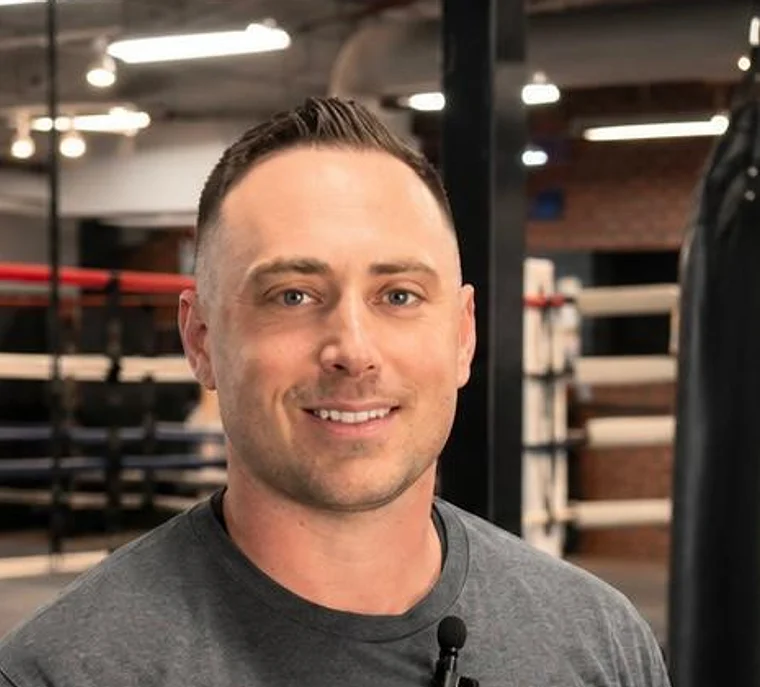
Coach Dean Moskowitz
Owner / Coach, Boxing for Balance — 500+ people with Parkinson's coached