
By Coach Dean Moskowitz
What the Michael J. Fox Foundation Actually Does (and How You Can Be Part of It)
Health information, not medical advice. Talk with your doctor before starting a new exercise program.
Quick answer: The Michael J. Fox Foundation is the largest nonprofit funder of Parkinson’s research in the world — founded in 2000 by the actor Michael J. Fox and Deborah W. Brooks, it has directed more than $2 billion to scientists in its pursuit of a cure and better treatments. It is not primarily a patient-services organization: you won’t call them for a local support group or an exercise class. What they offer you is a way to be part of the science — mainly by joining a research study and by adding your voice to advocacy. If you want your Parkinson’s to count for something bigger, this is the organization built for that.
Most weeks, somebody in one of my classes brings up Michael J. Fox. Usually it’s after a documentary, or an interview where he’s talking with that mix of honesty and stubborn optimism that made him the most recognizable face of this disease on the planet. And the question that follows is almost always the same: “What does his foundation actually do? Where does the money go?”
It’s a fair question, and the answer is genuinely impressive. So let me lay it out the way I’d explain it in the gym — plainly, and with an eye toward what it means for you.
A foundation built to put itself out of business
Michael J. Fox was diagnosed with Parkinson’s in 1991, at just 29 years old — and launched the foundation in 2000 after publicly disclosing that diagnosis, together with co-founder Deborah W. Brooks. The mission statement hasn’t wavered since — it is, in their words, “dedicated to finding a cure for Parkinson’s disease through an aggressively funded research agenda and to ensuring the development of improved therapies for those living with Parkinson’s today.”
Notice the two halves of that sentence. A cure eventually — and better treatments now. That second half matters for the people I coach. Research isn’t only a bet on some distant breakthrough; it’s how the medications and therapies my members rely on today got here in the first place.
The scale is hard to overstate. The foundation has provided more than $2 billion to scientists to date — a figure that, as Fox himself has noted in interviews, has at times outpaced even the U.S. government’s Parkinson’s research funding. They are a registered 501(c)(3) nonprofit (EIN 13-4141945), and their finances are publicly reviewable through ProPublica’s Nonprofit Explorer if you like to check before you give. I did.
What they fund, in plain English
The foundation’s research agenda covers the whole map — from biomarkers (measurable signs that could catch Parkinson’s earlier and track it more precisely) to new therapies moving through clinical trials. Their site’s research pages lay out the strategy in detail, and honestly, it’s more readable than you’d expect from a science-heavy organization.
Here’s the part I always emphasize in the gym: research needs people, not just money. The foundation is emphatic about this, and it’s where regular folks like my members come in.
The two ways you can actually participate
First: join a study. The foundation actively connects people — with and without Parkinson’s — to clinical research through their study-matching resources. Some studies are as simple as answering questionnaires from your couch. Others involve visits to a research center. Every single one moves the science an inch forward, and an inch is how this fight gets won. I’ve had members tell me that joining a study was the first time since diagnosis they felt like they were doing something about it rather than having something done to them. That feeling is worth a lot.
Second: advocate. The foundation channels the community’s voice toward policymakers on issues that affect research funding and care. Their advocacy resources make it about as easy as it can be — your story, aimed where it counts.
What they’re not — and why that’s okay
I want to be straight with you, because this is the part that saves people a frustrating phone call. The Michael J. Fox Foundation is a research engine. It is not the place to call for a local support group, a helpline, an exercise class, or help with insurance paperwork. Other organizations do those jobs, and do them well — the Parkinson’s Foundation’s helpline is the first call I recommend for day-to-day questions, and the American Parkinson Disease Association runs local chapters and programs all over the country.
Think of it like a fight team. The Fox Foundation is the promoter working to end the fight for good. The service organizations are your cornermen between rounds. You want both.
How to plug in
- Website: michaeljfox.org
- Learn the research landscape: their Parkinson’s 101 and research pages are some of the clearest explanations of the disease you’ll find anywhere
- Join a study: michaeljfox.org/join-study · Advocate: michaeljfox.org/advocacy
- Sign up for their email list — they’re good about sending real research news, not fluff
Put it to work: three moves this week
I’m a coach, so everything ends in an assignment. If the Fox Foundation’s work speaks to you, here are three concrete things you can do before next weekend, in order of effort:
- Ten minutes: read Michael’s story and skim Parkinson’s 101. Even members who’ve lived with PD for years tell me they learned something — and if you’re a care partner or an adult child trying to understand what your person is facing, it’s one of the gentlest crash courses anywhere.
- Twenty minutes: browse current study opportunities. You’re not committing to anything by looking. Read what’s recruiting, see what participation actually involves, and notice how many studies want people without Parkinson’s too — spouses and friends, this means you.
- Five minutes: join their email list. Research news arrives with context instead of headlines, which matters, because a “breakthrough” in a news headline and a breakthrough in real life are rarely the same thing.
And a fourth, unofficial move: the next time someone in your life asks “is anyone actually working on this?” — and if you have Parkinson’s, someone eventually will — you’ll have a two-word answer and a two-billion-dollar receipt.
A note for my members about hope
One more thing, because it comes up in the gym more than you’d think. Some of my members keep a careful distance from research news — they’ve been burned by a decade of “promising” headlines that didn’t change their Tuesday. I understand that guardedness completely, and I’d never talk anyone out of it.
But here’s the version of hope I can stand behind as a coach: the foundation’s own mission puts improved therapies for those living with Parkinson’s today right alongside the cure. That’s not lottery-ticket hope. That’s the same kind of hope we practice in class — incremental, earned, compounding. You don’t have to believe a cure lands next year to believe the work matters.
Where boxing fits into all this
Here’s my honest take, as a coach and not a scientist: research is the long game, and exercise is the today game. The evidence keeps stacking up that regular, vigorous exercise is one of the most powerful things a person with Parkinson’s can do for their symptoms right now — I’ve written about what the research says on exercise and Parkinson’s if you want the details with citations.
So my prescription is both. Support the science that ends this thing. And while the scientists work, keep moving — because the strongest version of you is the one that benefits most from every breakthrough they deliver.
If you’re in the Los Angeles or Ventura County area and want a place to do that moving, come try a class — the first one’s free. And if you just want to talk to someone who gets it, our free monthly support group is open to everyone.
Sources
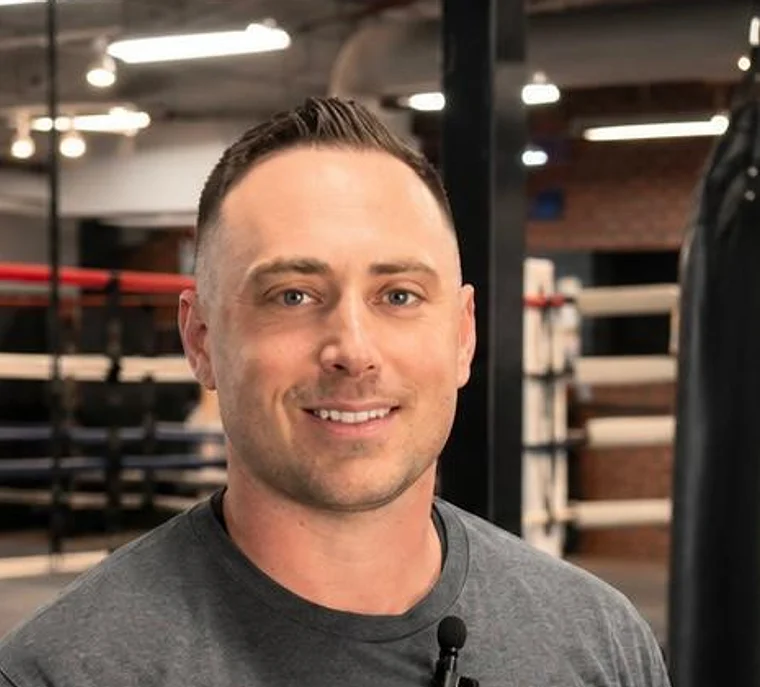
Coach Dean Moskowitz
Owner / Coach, Boxing for Balance — 500+ people with Parkinson's coached