
By Coach Dean Moskowitz
Occupational Therapy for Parkinson's: What OTs Actually Do
Health information, not medical advice. Talk with your doctor before starting a new exercise program.
Quick answer: Occupational therapy (OT) for Parkinson’s disease is about keeping you doing the things that make up your life — dressing, cooking, writing, showering, working, driving — as symptoms change. An occupational therapist watches how you do those tasks, then changes the task, the tools, or the home so you can keep doing them safely and independently. You get there by asking your neurologist for a referral, and it’s typically covered by Medicare and most insurance when it’s medically necessary.
Of all the specialists on a Parkinson’s care team, the occupational therapist is the one most people can’t quite picture. Physical therapy sounds like exercise. Speech therapy sounds like talking. But “occupational” therapy? Most of my members assume it has something to do with jobs.
Here’s the plainest way I can put it: a physical therapist helps your body move better; an occupational therapist helps your life work better. The “occupations” are simply the things that occupy your days — buttoning a shirt, making coffee, signing a check, getting in and out of the shower. Parkinson’s picks fights with exactly those small tasks, and OTs are the professionals trained to win those fights.
I’m a coach, not a therapist — my lane is exercise, and I’m careful to stay in it. But after ten years of coaching more than 500 people with Parkinson’s, I’ve watched what happens when members add an OT to their team, and I’ve become the guy who nags people to ask for the referral. This article is that nagging, in written form.
What an OT actually helps with
Handwriting. Parkinson’s famously shrinks handwriting (the medical term is micrographia). OTs retrain writing with the same “think BIG” amplitude principle behind LSVT BIG, and when needed they’ll set you up with weighted pens, grips, or smart workarounds like signature stamps for the checkbook.
Dressing and grooming. Buttons, zippers, laces, razors — fine-motor tasks that tremor and stiffness make maddening. An OT teaches techniques (dress your stiffer side first; sit down for pants, always) and tools that genuinely help: button hooks, elastic laces, electric razors. Small dignity, defended daily.
Eating and kitchen work. Weighted utensils that quiet tremor, plate guards, two-handled cups, strategies for carrying a coffee cup across a kitchen without a spill. Also real kitchen-safety thinking: sliding pots instead of lifting, sitting to chop.
Bathing and the bathroom. This is where OTs prevent disasters. They’ll recommend and place grab bars, shower chairs, raised toilet seats, and non-slip mats — decisions worth getting professionally right, because the bathroom is the most dangerous room in the house for anyone unsteady. It’s a core part of fall-proofing, which matters enormously given that the CDC counts one in four adults 65+ falling every year.
A home safety walk-through. Many OTs will assess your actual home — rugs, cords, lighting, furniture layout, where the walker actually fits — and hand you a specific, prioritized fix-it list. If you do only one OT visit ever, make it this one.
Energy management. Parkinson’s fatigue is real, and OTs teach “energy budgeting”: pacing tasks, building rest into routines, doing demanding things at your medication’s best times, and simplifying steps so the energy you have goes toward the things you love instead of the chores you don’t.
Driving. The hard topic. Some OTs are certified driving rehabilitation specialists who can objectively assess driving safety — and, when it’s time, help plan the transition. Families tell me an objective professional voice makes this conversation survivable in a way that family opinion never quite does.
Work and hobbies. If you’re still working, OTs problem-solve the desk, the tools, the schedule. And they take hobbies as seriously as jobs — adapted card holders, easier gardening tools, whatever keeps the you parts of your life alive.
What a first OT visit looks like
Expect an hour or so of questions and watching. Which tasks are getting harder? What does a normal day look like? What matters most to you? Then they watch you actually do things — write a sentence, button a cuff, stand from a chair, maybe make a cup of tea. From that they build a plan: usually a handful of sessions teaching techniques, plus equipment recommendations and home changes. It is refreshingly practical. No machines that beep, no jargon — just a trained eye on your real life.
How to get OT (and get it paid for)
- Ask your neurologist for a referral. The magic words: “I’d like a referral to occupational therapy to help with daily activities.” If specific things are getting harder — handwriting, dressing, shower safety — name them.
- Ask for someone with Parkinson’s experience. Therapists who know PD understand medication on/off times and amplitude-based training. The Parkinson’s Foundation Helpline at 1-800-4PD-INFO (1-800-473-4636) can help you find experienced providers near you.
- On coverage: Medicare Part B generally covers outpatient occupational therapy when a doctor certifies it’s medically necessary, and most private insurance follows similar rules — expect the usual deductibles and copays, and confirm specifics with your plan before starting.
- Go early, not late. Like everything in Parkinson’s care, OT works best before the crisis — learn the techniques while they’re easy to learn. And a re-visit every year or two keeps the strategies matched to your symptoms.
Simple adaptations OTs recommend most
You’ll get a personalized list from your own therapist, but these come up so often they’re worth knowing about now — most cost under $30 and are available at any pharmacy or online:
- Weighted utensils and pens. Added weight can steady a mild tremor enough to change a meal or a signature.
- Button hooks and zipper pulls. Turn a five-minute frustration into a ten-second task.
- Elastic shoelaces. Shoes become slip-ons; bending and tying disappear as problems.
- A shower chair and handheld shower head. Turns the most dangerous room in the house into a manageable one.
- Raised toilet seat with arms. Uses the same principle as the sit-to-stand exercises we do in class — less depth to rise from means less strength required.
- Non-slip matting in the tub and under plates and cutting boards.
- Bed rails or a leg lifter if rolling over and getting up have gotten difficult.
- A rolling walker with a seat if fatigue limits how far you go — rest built into the trip.
- Voice-to-text on your phone when handwriting or typing is tiring.
The reason to hear these from an OT rather than a catalog: they’ll tell you which ones you need, in what order, and how to use them correctly — and they’ll spot the three problems you stopped mentioning because you’d quietly worked around them.
Where exercise fits (my lane)
OT and exercise aren’t rivals; they’re teammates working the same project — your independence — from two directions. The OT makes the task easier; exercise makes you stronger for the task. Every sit-to-stand we do in class is bathroom independence. Every big reaching drill is a cupboard you can still open. The grip work on the heavy bag is jar lids and buttons.
That’s the whole care-team picture: neurologist for medication, physical therapist for walking and balance, OT for daily tasks, speech therapist for voice and swallowing — and a coach to keep you moving between all of them, which is where our classes come in. First one’s free, at any of our four LA and Ventura County locations: schedule here or call 747-234-1115.
Ask for the referral this week. It’s one sentence to your neurologist, and it might be the most practical hour of your whole care plan.
Dean Moskowitz is the head coach at Boxing for Balance. He has spent more than ten years helping over 500 people with Parkinson’s — and hundreds of older adults — build strength through non-contact boxing and exercise, in classes across Los Angeles and Ventura County. Talk with your doctor about whether occupational therapy is right for you.
Sources: Parkinson’s Foundation — living with Parkinson’s resources · American Occupational Therapy Association · CDC — Facts about falls · Medicare.gov
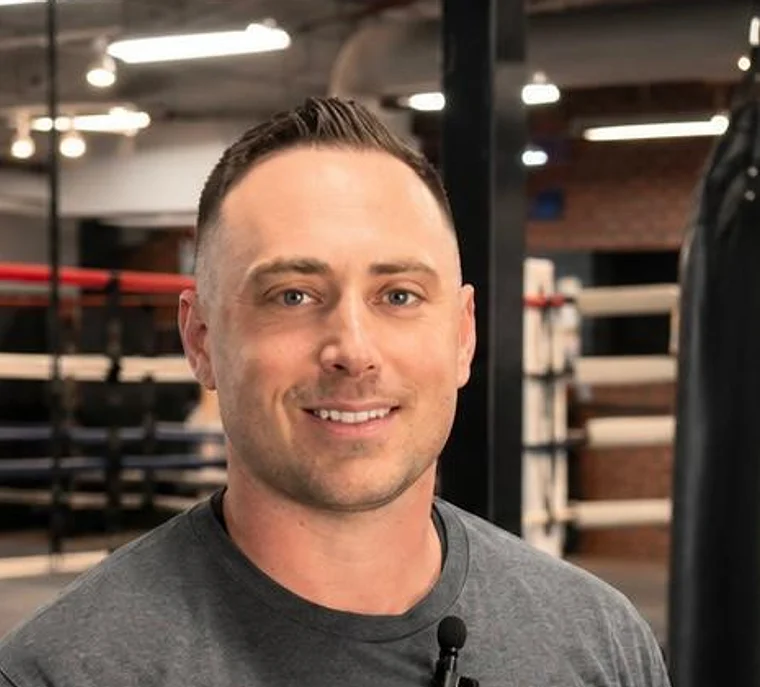
Coach Dean Moskowitz
Owner / Coach, Boxing for Balance — 500+ people with Parkinson's coached