
By Coach Dean Moskowitz
Parkinson Voice Project: Getting Your Voice Back With SPEAK OUT!
Health information, not medical advice. Talk with your doctor before starting a new exercise program.
Quick answer: Parkinson Voice Project is a nonprofit in Richardson, Texas with a single, laser-focused mission: helping people with Parkinson’s regain and retain their speech and swallowing. Their signature program, SPEAK OUT!®, pairs individual speech therapy with ongoing group maintenance sessions, and their network of trained providers means you can find certified SPEAK OUT! therapy far beyond Texas — plus free daily home practice sessions online. Founded by speech-language pathologist Samantha Elandary — it began as the Texas Voice Project in 2005 — the organization runs on a remarkable Pay It Forward funding model. If your voice has gotten softer and people keep asking you to repeat yourself, this is the organization built precisely for you.
Of all the changes Parkinson’s brings, the voice might be the sneakiest. It fades so gradually that most of my members don’t notice — right up until they’re saying “never mind, it wasn’t important” for the third time at a family dinner, because repeating themselves has become exhausting.
I watch for it in the gym. And when I hear it, this is the organization I bring up.
Why the voice goes quiet — and why you don’t notice
Parkinson’s affects the same motor systems that power speech that it does the ones that power walking, and it plays a trick on perception: your own voice sounds normal to you even as it drops in volume and clarity for everyone else. So people unknowingly speak softer and softer, get tired of being asked to repeat themselves, and start talking less. And withdrawal from conversation slides straight toward the isolation I’ve written about before — this is never just about volume.
The good news: speech, like balance, responds to training. Which is the entire premise of Parkinson Voice Project.
One mission, done exceptionally well
Plenty of organizations in this series do many things. Parkinson Voice Project does one thing — speech and swallowing for people with Parkinson’s — and that focus shows everywhere.
The organization’s history starts with founder Samantha Elandary, a speech-language pathologist who, in 2005, founded the Texas Voice Project for Parkinson Disease — a nonprofit dedicated to helping people with Parkinson’s regain and retain their speech and swallowing that literally began with patients being treated in her home. It grew into Parkinson Voice Project, now headquartered in Richardson, Texas, where Elandary and her team developed the approach they’re known for today.
How SPEAK OUT! works
SPEAK OUT!® is built on a two-part structure that, as a coach, I find dead-on right:
Part one: individual therapy. One-on-one sessions with a trained speech-language pathologist, converting speech from an automatic act into an intentional one — speaking with deliberate purpose rather than on autopilot, since Parkinson’s disrupts exactly those automatic systems.
Part two: maintenance for life. This is the part I love, because it mirrors what I preach about exercise: the gains only last if the practice continues. Graduates continue with group maintenance sessions — practicing together, keeping a stronger voice, adding a social circle in the process. The organization also runs SPEAK OUT! home practice sessions you can join online, which removes the “I can’t get there” excuse entirely.
Sound familiar? Train hard, then keep showing up, with people who hold you accountable. It’s boxing class for your voice. Their site also hosts an eLibrary of education and an online directory of CERTIFIED SPEAK OUT! PROVIDERS — speech therapists across the country trained in the method, so distance from Texas doesn’t lock you out.
The Pay It Forward model
Here’s the detail that tells you who these people are. Parkinson Voice Project runs on what they call a Pay It Forward funding model — rather than billing being the barrier, those who’ve benefited help fund the next person’s therapy. As someone who wrestles with how to keep help affordable in my own small corner of this world, I have enormous respect for an organization that structured generosity itself into the business model.
They’re a 501(c)(3) nonprofit (EIN 20-3940037), verifiable via ProPublica.
Who should call them
- Anyone whose family says you’ve gotten quiet — even if you don’t hear it yourself. Especially if you don’t hear it yourself.
- Anyone experiencing swallowing changes — this is a medical safety issue, not a quirk, and it’s squarely in their wheelhouse.
- The newly diagnosed: starting voice work early beats repairing late. Speech therapy is one of the first-steps moves I recommend.
- Care partners who want to help without becoming the volume police — their resources give you a better script than “what?”
How to reach them
- Website: parkinsonvoiceproject.org
- Phone: 469-375-6500
- Address: 646 N. Coit Road, Suite 2250, Richardson, TX 75080
- Find a provider / join home practice: via their site
Put it to work: three moves this week
Assignments, as always:
- Do the honest volume check. Ask the person who hears you most: “Have I gotten quieter this year?” Then — this is the hard part — believe their answer over your own ears. Remember, Parkinson’s makes your voice sound normal to you while it fades for everyone else. The people around you are your instruments here.
- Look up a CERTIFIED SPEAK OUT! PROVIDER. Use their provider directory to see who’s trained in SPEAK OUT! near you, and ask your doctor for a speech therapy referral — voice and swallowing therapy is standard, legitimate Parkinson’s care, not an extra.
- Sit in on a home practice session online. Free, joinable from your couch, and the fastest way to understand what this training actually feels like before committing to anything.
For care partners: how to help without becoming the volume police
One more section, because there’s a trap here I’ve watched families fall into. When a voice fades, loving people start doing the work for it — finishing sentences, answering questions aimed at the person with Parkinson’s, translating at family gatherings. Every bit of it comes from kindness. And every bit of it accelerates the retreat, because a voice that’s never needed gets quieter faster.
The better play, and the one speech professionals build their group work around, is making space instead of filling it: let the sentence finish, redirect the waiter’s question back — “ask him, he’s right there” — and treat practice as something you do with them, not something you monitor. The difference between “speak up, honey” and practicing together for ten minutes a day is the difference between a critic and a cornerman. You know which one I’d rather have in my corner. Yours does too.
The loudest room in the building
In my classes we count punches out loud, on purpose — ten, nine, eight, down to one, louder as we go. Members think it’s for morale. It’s partly for morale. It’s also because a coach can sneak voice work into a boxing workout, and because a room full of people counting at full volume is the sound of nobody giving in quietly.
Parkinson Voice Project turned that idea into a science. If the volume’s been slipping, find them — and then come count rounds with us. If you’re near LA or Ventura County, the first class is free, and our free monthly support group is a fine place to practice being heard.
Sources
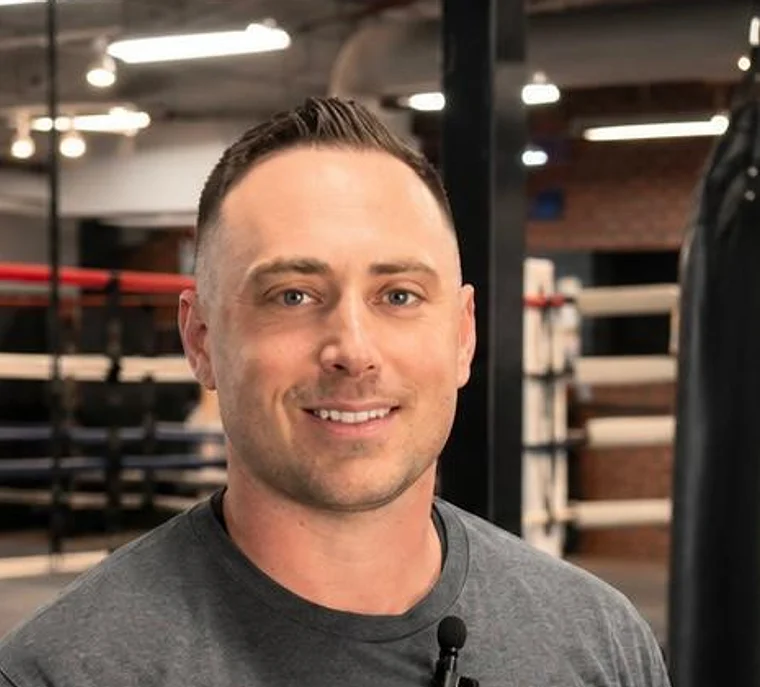
Coach Dean Moskowitz
Owner / Coach, Boxing for Balance — 500+ people with Parkinson's coached