
By Coach Dean Moskowitz
What to Expect at Your First Rock Steady Boxing® Class
Health information, not medical advice. Talk with your doctor before starting a new exercise program.
Quick answer: Your first Rock Steady Boxing® class is easier than the version in your head. Wear comfortable clothes and supportive shoes, bring water, and arrive a few minutes early — gloves and equipment are provided at my gyms, and your first class is free. You’ll warm up, work through balance and footwork drills, throw non-contact combinations on pads, do some strength work, and stretch out — with every single exercise modifiable or doable seated. Nobody will push you past what’s safe, nobody expects experience (almost no one arrives with any), and the thing first-timers report most isn’t soreness. It’s that they laughed more than they had in months.

Written by an official affiliate coach
After years of running Rock Steady Boxing affiliate classes across LA and Ventura County, I can tell you the hardest part of anyone’s first class with near-certainty: it’s the door. Not the punches, not the footwork — the twenty feet between the parking lot and the front desk. So this post exists to shrink that distance by telling you, in detail, exactly what’s waiting on the other side.
Before you come: the boring logistics
Talk to your doctor first. Not fine print — the actual first step. Rock Steady Boxing is exercise, real exercise, and your medical team should know you’re starting it. Nearly every doctor I’ve ever heard about says some version of “great, go” — the Parkinson’s Foundation recommends at least 2.5 hours of exercise a week for people with PD — but the clearance conversation comes first.
What to wear: anything you’d wear for a walk — comfortable clothes you can move in, and supportive athletic shoes. That’s it. No boxing gear needed: at my four affiliate gyms, gloves and equipment are provided for your first class.
What to bring: water, any medications on your normal schedule, and your care partner if you’d like — they’re welcome at my classes, and more than a few have ended up in gloves themselves by week three.
Timing note that matters: most members find it best to train during their medication “on” time. You know your rhythm; schedule around it, and if you’re not sure, call me at 747-234-1115 and we’ll figure out the right class time together.
The first ten minutes
You’ll be greeted, you’ll fill out the standard paperwork, and I (or one of my coaches) will ask you some questions — about your Parkinson’s, your movement, your worries, what you want to get back. This conversation is the most important part of your first day, because everything we do afterward gets calibrated to it. Tell us the truth, including the hard parts. The member who says “my balance is terrible and I’m scared of falling” gets a better first class than the one who toughs it out silently, because we can build the right supports from minute one.
Then you’ll meet the room. Expect a mix that surprises most first-timers: members newly diagnosed and members fifteen years in, people in their 50s and people in their 90s, standing boxers and seated boxers. Every one of them had a first day too, and they remember it — which is why new people get welcomed like family at these gyms, not sized up.
The class itself, blow by blow
Warm-up (first segment). Gentle mobility work — shoulders, hips, ankles, neck — plus light movement to get the heart going. Nobody cold-starts.
Balance and footwork. Boxing stance, weight shifts, stepping drills, agility work. This will feel like the “exercise class” part, and it’s doing the heaviest lifting for fall prevention — the footwork of boxing is balance training wearing a disguise. If you use a walker or need a chair or rail nearby, that’s built in, not bolted on.
Gloves on. The part you came for. You’ll wrap up, glove up, and learn the basic punches — jab, cross, maybe a hook — then throw combinations on focus mitts or bags. Two things I’ll coach you on relentlessly: make it BIG (Parkinson’s shrinks movement; we practice enlarging it) and make it LOUD (we count punches at full volume, because your voice needs training too). Expect to feel slightly ridiculous for about ninety seconds, and then expect to feel something you may not have felt in a while: powerful.
Strength and conditioning. Functional work — sit-to-stands, carries, core — scaled hard to your level. First-timers do less; that’s by design.
Cool-down. Stretching, breathing, and usually the best conversation of the hour.
Total time: about an hour. Total contact: zero. Nobody spars, nobody gets hit, ever — that’s the whole design of the curriculum.
What nobody warns you about
Three things first-timers consistently tell me they didn’t expect:
The laughing. A Rock Steady class is loud and frequently hilarious. People expect something clinical and find something closer to a team locker room. I’ve written about why that social piece matters so much with Parkinson’s — the community isn’t a bonus feature, it’s half the medicine.
The fatigue — the good kind. You’ll likely be tired afterward, maybe more than expected. Rest, hydrate, and expect some mild soreness a day later, like any new exercise. If anything feels wrong rather than worked, tell your coach and your doctor — but the overwhelming norm is “pleasantly wiped out.”
Wanting to come back. The research on boxing for Parkinson’s notes remarkably high adherence — people stick with this program at rates most exercise studies would envy. Day one is usually when that hook sets.
Your first-class checklist
- Doctor’s OK — get it.
- Pick your gym: Santa Monica, Lake Balboa, Woodland Hills, or Thousand Oaks.
- Schedule the free class or call/text 747-234-1115.
- Comfortable clothes, supportive shoes, water, “on”-time scheduling.
- Walk through the door. That’s the whole fight, right there.
One clarity note, because I keep this line bright: the in-gym classes at those four locations are licensed Rock Steady Boxing affiliate programs. My online program, assisted living classes, and private training are Boxing for Balance — my own separate programs, not Rock Steady Boxing. Same coach either way.
The people in that room were all exactly where you are once — one nervous first class away from the best decision they made after diagnosis. Come take yours. It’s free, and we’ll leave a pair of gloves out for you.
Three questions everybody asks before day one
“Will I hold the class back?” No — and I want you to hear how structurally impossible that is. Every drill runs at multiple levels simultaneously; the veteran next to you is doing a harder version of your exercise, not waiting on you. Nobody in that room forgets their own first day.
“What if I fall?” Fall prevention is baked into the room itself: coaches positioned deliberately, chairs and support always in reach, and exercises chosen to train the abilities that prevent falls rather than gamble with them. If balance is a live concern, say so at intake — that’s precisely what the conversation is for.
“What if I hate it?” Then you’ve spent one free hour learning that, and I’ll happily point you toward other forms of exercise that the research supports. Movement you’ll actually do beats movement I’d pick for you, every time. But fair warning, backed by years of first days: the hate-it rate is astonishingly low.
Sources
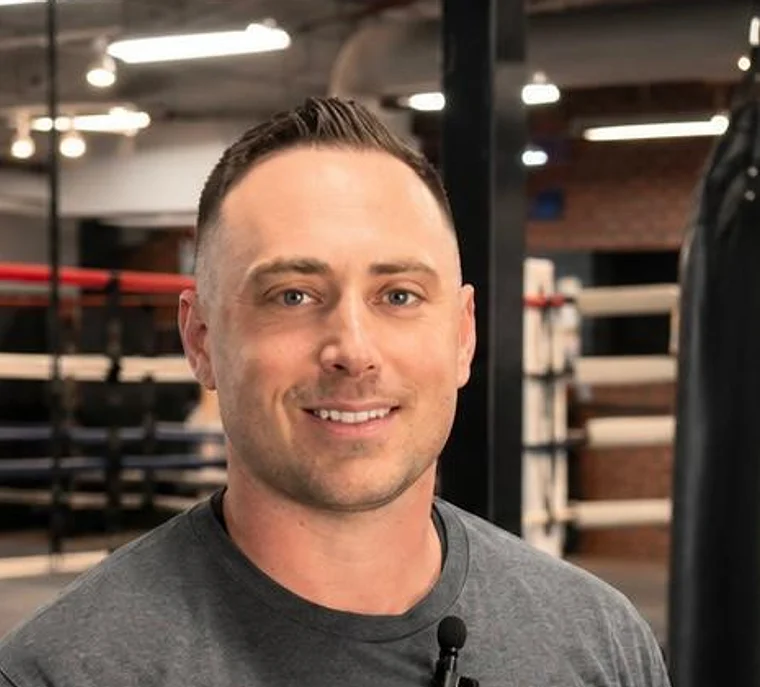
Coach Dean Moskowitz
Owner / Coach, Boxing for Balance — 500+ people with Parkinson's coached