
By Coach Dean Moskowitz
Strength Training for Seniors: It's Never Too Late
Health information, not medical advice. Talk with your doctor before starting a new exercise program.
Quick answer: Adults lose roughly 3–5% of their muscle mass every decade after age 30, and the loss speeds up after 60. Strength training reverses it — at any age. Two sessions a week of simple exercises like sit-to-stands, wall push-ups, and rows can rebuild strength, protect your balance, and keep you independent.
Here is a number worth sitting with: after age 30, most people lose about 3 to 5 percent of their muscle each decade. After 60, the loss speeds up. Doctors call it sarcopenia. Most of us just call it “getting older” — jars that will not open, stairs that feel steeper, a chair that got harder to stand up from.
But that second part, the “just getting older” part, is not the whole story. Muscle loss responds to training at every age. Studies have put people in their 80s and 90s on simple strength programs and watched them get measurably stronger within weeks. Your muscles never stop listening. They are waiting for you to ask.
Why strength matters more now, not less
When you were 40, losing a little strength was an inconvenience. Now it is the thing standing between you and the life you want. Strength is what lets you:
- Get up from a chair, the toilet, or the floor without help
- Carry groceries and grandchildren
- Catch yourself when you stumble instead of falling
- Live in your own home longer
That third one deserves attention. More than 14 million adults 65 and older — one in four — report falling each year, and falls are the leading cause of injury death in that age group, according to the CDC. Weak legs and hips are one of the biggest reasons people fall. Strength training is one of the most direct things you can do about it.
How much do you actually need?
Less than you might fear. The CDC recommends muscle-strengthening activity for all major muscle groups at least two days a week. Each session can be 20 to 30 minutes. That is the target — but if you are starting from nothing, one short session a week is a real beginning, and you can grow from there.
A starting routine you can do at home
No gym, no barbells. A sturdy chair, a wall, and later a resistance band. Do this routine twice a week, with at least one rest day between sessions.
| Exercise | What it builds | Start with |
|---|---|---|
| Sit-to-stand from a chair | Thighs, hips — your independence muscles | 5 reps |
| Wall push-ups | Chest, arms, shoulders | 8 reps |
| Heel raises (hold the counter) | Calves, ankle stability | 10 reps |
| Standing side leg lifts | Hips — key for balance | 8 per side |
| Band or towel rows | Upper back, posture | 10 reps |
| Farmer’s carry (two grocery bags) | Grip, core, whole body | Walk 30 feet |
Two rules make this work:
1. The last two reps should feel like effort. If 5 sit-to-stands feel easy, do 8. If 8 feel easy, slow them down or hold a book to your chest. Muscle grows when you ask it to do slightly more than it finds comfortable. Slightly. This is not about strain — it is about honest effort at your own level.
2. Add a little every week or two. One more rep. A slower lowering phase. A thicker band. Small increases, stacked up over months, are how a person goes from struggling with one sit-to-stand to knocking out fifteen.
“But I’ve never lifted weights in my life”
Good news: you do not have to start now. Every exercise above uses your own body or household objects. And you have been strength training all along without the name — lifting laundry baskets, pushing open heavy doors, hauling a vacuum up the stairs. A routine just makes it organized, so every muscle gets its turn and nothing gets missed.
If you would rather have someone guide you, that is what trainers who work with older adults are for. A good one will meet you exactly where you are — whether that is deadlifts or standing up from a chair without using your hands. That is exactly what our private training for seniors is built for.
Is it safe?
For most people, yes — strength training is one of the safest forms of exercise there is, because you control the speed and the load completely. A few honest cautions:
- Check with your doctor first if you have heart disease, uncontrolled blood pressure, osteoporosis, or you are recovering from surgery. Usually the answer is “yes, exercise — here’s what to watch for.” Sometimes there are movements to modify. Ask.
- Never hold your breath. Breathe out during the hard part of each exercise. Counting out loud works.
- Soreness is normal, pain is not. A dull ache in your muscles a day or two after training means they are adapting. Sharp pain in a joint means stop and reassess.
- Skip the “no pain, no gain” talk. That advice was bad when it was invented and it is worse now. Steady, patient effort wins.
What results look like, honestly
Weeks one and two: probably nothing you can feel, and maybe some soreness. This is where most people quit. Please don’t.
Weeks three to six: everyday things start feeling lighter. The stairs, the groceries, getting out of the car. This is not your imagination — early strength gains come fast because your nervous system is learning to use the muscle you already have.
Months two to six: visible, measurable change. More reps, steadier balance, better posture. People tell us they stopped thinking about their body during daily tasks — which is the real goal. Strength is freedom you get to stop noticing.
Frequently asked questions
Am I too old to build muscle? No. Research on adults in their 90s shows strength gains from basic training. Older muscle adapts more slowly than younger muscle, but it adapts. Every year of age makes starting more valuable, not less.
Should I use machines, dumbbells, or bands? Whatever you will actually do. Bodyweight and bands cover everything a beginner needs. Machines at a gym are a fine next step because they guide the movement for you.
Can I do strength training with Parkinson’s? Yes — strength work is part of the exercise guidelines for Parkinson’s from the Parkinson’s Foundation. Our Parkinson’s boxing classes build it into every session.
How is this different from cardio like walking? Walking keeps your heart and lungs healthy. Strength training keeps your muscles and bones strong. You need both, and neither replaces the other.
Dean Moskowitz is the head coach at Boxing for Balance, where he has spent over a decade helping older adults and more than 500 people with Parkinson’s get stronger through non-contact boxing and exercise across Los Angeles and Ventura County.
Sources: Harvard Health — Preserve your muscle mass · Cleveland Clinic — Sarcopenia · CDC — Physical activity for older adults · CDC — Older adult falls data
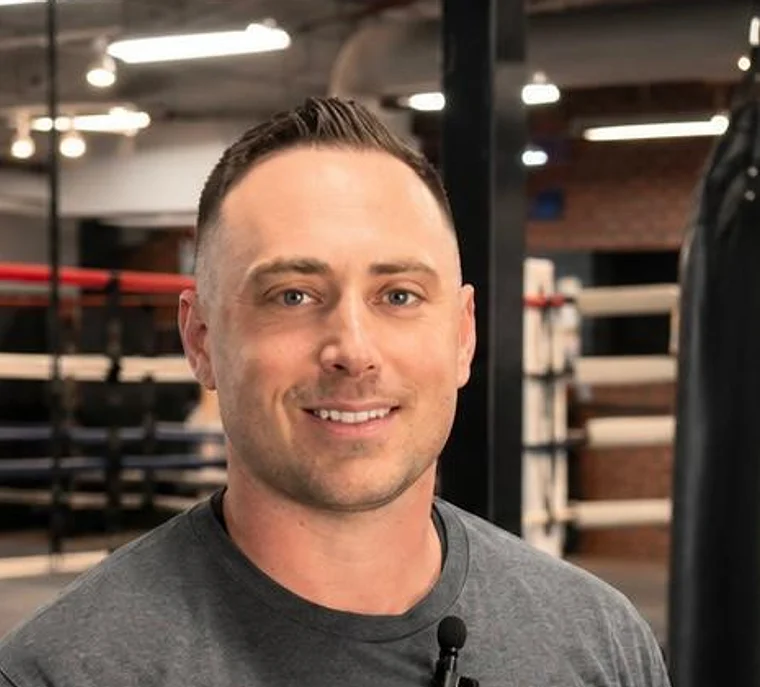
Coach Dean Moskowitz
Owner / Coach, Boxing for Balance — 500+ people with Parkinson's coached