
By Coach Dean Moskowitz
Parkinson's Support Groups in Los Angeles & the Valley
Health information, not medical advice. Talk with your doctor before starting a new exercise program.
Quick answer: I host a free online Parkinson’s support group for people with Parkinson’s and care partners — the last Tuesday of every month at 2:00 p.m. Pacific, on Zoom. Email me at boxingforbalance@gmail.com for the link, or call or text 747-234-1115 with questions. And if you’d like more options across LA and the Valley, the Parkinson’s Foundation Helpline (1-800-473-4636), Parkinson’s Community Los Angeles (310-880-3143), and the American Parkinson Disease Association’s Santa Monica center (310-582-7641) all connect people to groups near them — every number in this guide is real and verified.
Parkinson’s has a way of shrinking a person’s world. Friends don’t always know what to say. Family tries hard but can’t fully understand. And so many people end up carrying the diagnosis quietly, in a house that got lonelier without anyone deciding it should.
A support group pushes back on that. It’s a room — or a video call — full of people who get it without explanation. After ten years of coaching more than 500 people with Parkinson’s, I can tell you what my members tell me: finding the right group of people changes how the whole disease feels.
Here is where to find one in our area, with real phone numbers you can call today.
Start with one phone call
Parkinson’s Foundation Helpline — 1-800-4PD-INFO (1-800-473-4636)
(The letters in “4PD-INFO” are just a way to remember the number on a phone keypad — it’s the same as dialing 1-800-473-4636.) This free helpline is staffed Monday through Friday, 9 a.m. to 7 p.m. Eastern time, in English and Spanish. Tell them your zip code and they’ll refer you to support groups, wellness programs, and Parkinson’s-experienced professionals near you. You can also email Helpline@Parkinson.org. If you only do one thing after reading this article, make this call. The people who answer are kind, and no question is too small.
Local organizations that run and list groups
PCLA — Parkinson’s Community Los Angeles Phone: 310-880-3143 · Website: pcla.org
PCLA is a nonprofit built for the LA Parkinson’s community. They run support groups, programs for people who are newly diagnosed, young onset support, and care partner programs — plus wellness events and an education library. Their resource specialists answer the phone and help you find your fit. If you’re anywhere in Los Angeles, this organization deserves to be in your contacts.
APDA — American Parkinson Disease Association, California Chapter LA-area Information & Referral Center: 310-582-7641 (Santa Monica) · Website: apdaparkinson.org
The APDA’s California chapter maintains lists of support groups and exercise classes across the state, and their Los Angeles Information & Referral Center — based at the Pacific Movement Disorders Center in Santa Monica — is staffed by a licensed social worker who helps people and families find local resources. The APDA also runs a free eight-week virtual support program for care partners. Caregivers need support too, and this one was built just for them.
Other places worth checking:
- Your neurologist’s office. Movement disorder clinics usually keep an updated list of nearby groups — often ones that meet at their own hospital.
- 211 LA (dial 2-1-1 or visit 211la.org). Los Angeles County’s free referral line lists health-related support groups countywide.
- Hospital systems near you. Several hospitals across LA and Ventura County host recurring Parkinson’s groups. Meeting times change, so call the hospital’s neurology or community-education department to ask what’s current.
One honest note: specific meeting days and locations change often — groups move, merge, and go virtual. That’s why this guide points you to the organizations rather than listing individual meetings that might be outdated next month. One phone call gets you today’s accurate answer.
What actually happens at a support group?
If you’ve never been, the unknown can feel like a wall. Here’s what to expect, so there are no surprises.
Most groups meet monthly or twice a month, for about an hour or ninety minutes. Some are just for people with Parkinson’s. Some welcome spouses and family. Some are only for care partners — those matter enormously. A typical meeting has introductions, some open sharing, and often a guest speaker: a neurologist, a physical therapist, a researcher.
Nobody makes you talk. You can sit, listen, and drink the coffee. Many people do exactly that for their first few meetings, and that’s a fine way to start.
And if the first group doesn’t feel right — wrong vibe, wrong ages, wrong format — that’s not a failure, and it doesn’t mean groups aren’t for you. Try a different one. Groups have personalities, just like people, and there are enough options in LA that you can find your room.
Virtual groups count too
If leaving the house is hard, or driving across the Valley at night isn’t happening, virtual groups are real support. The Parkinson’s Foundation Helpline can point you to online groups, PCLA runs online programming, and the APDA’s care partner program meets over Zoom. Support through a screen is still support.
The other kind of support group
I’ll say this carefully, because our classes are not therapy and not a substitute for a support group: some of the strongest community I’ve ever seen happens with gloves on.
At our Parkinson’s boxing classes, people fight the same fight side by side, twice a week. They notice when someone’s missing. They celebrate when someone’s punch gets longer. Members trade doctor recommendations between rounds and sit in the parking lot talking long after class ends. Exercise is the reason everyone shows up — the research on exercise and Parkinson’s is strong — but the people are why they stay.
So my honest advice is: do both. Find a support group for the talking, and find a class for the moving. Your first class with us is free, at any of our four locations across LA and Ventura County. See our locations or call 747-234-1115.
Frequently asked questions
Do I need a referral to join a support group? No. Support groups are free and open — you just show up, though calling ahead is smart to confirm the meeting time.
I was just diagnosed. Is it too early for a group? No — and earlier may be better. PCLA has programming built for newly diagnosed people, and hearing from folks living well ten years in can take a lot of fear out of a new diagnosis.
Are there groups for caregivers and spouses? Yes. The APDA runs a free virtual care partner program, and many local groups are care-partner-specific. Caring for someone with Parkinson’s is its own journey through this disease, and there’s a seat for you too.
Are there groups for young onset Parkinson’s? Yes — PCLA has young onset support, and the helpline can point you to more. Being decades younger than everyone in the room is a real concern; young onset groups solve it.
Dean Moskowitz is the head coach at Boxing for Balance and has coached more than 500 people with Parkinson’s over the past decade across Los Angeles and Ventura County. Phone numbers verified August 2026 — meeting details change, so always call to confirm.
Sources: Parkinson’s Foundation Helpline · PCLA — Parkinson’s Community Los Angeles · APDA California Chapter
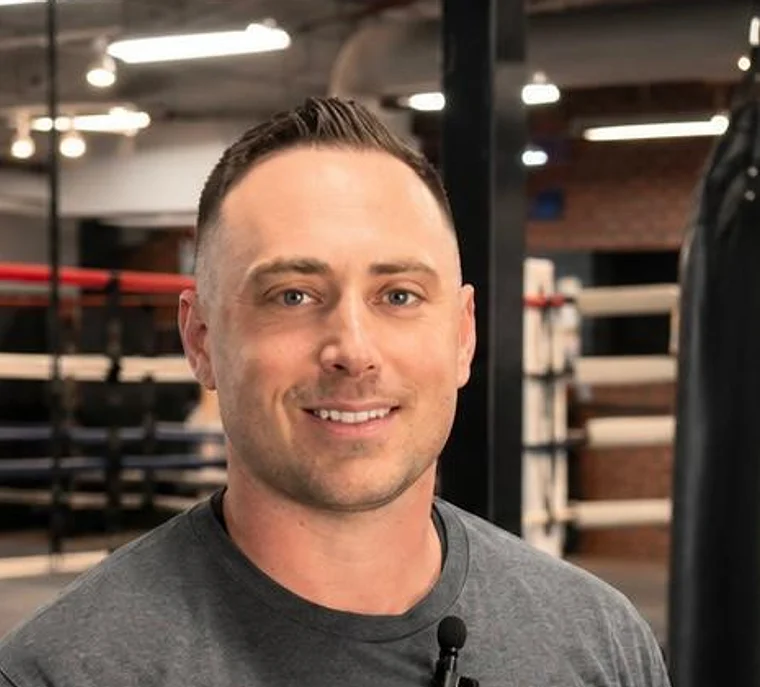
Coach Dean Moskowitz
Owner / Coach, Boxing for Balance — 500+ people with Parkinson's coached